In this guide (12 sections)
- Three types of home-based business
- Service businesses (lowest cost)
- Online businesses
- Product businesses (some startup cost)
- How to evaluate any "opportunity"
- The legal basics
- Start small, test, then grow
- Case study: how to read an income disclosure
- Comparison: common home business models
- Validating demand before you invest
- Simple systems that save time
- Where to get support
"Business opportunity" can mean anything from a genuine small business to a scheme designed mainly to sell you a starter kit. This guide covers low-cost businesses you can run from home, how much each typically needs to start, and a simple checklist for judging any opportunity you're offered.
Three types of home-based business
- Service businesses: you sell your time and skills. Lowest cost, fastest to start.
- Online businesses: you build something (an audience, a list, products) that earns over time.
- Product businesses: you make or buy and resell physical goods. Some startup cost and more admin.
Service businesses (lowest cost)
| Business | Startup needs | Who pays |
|---|---|---|
| Freelance writing, design, editing, video | Laptop, samples | Businesses, creators |
| Virtual assistant / online business manager | Laptop, organisation skills | Small business owners |
| Bookkeeping | Accounting software knowledge | Small businesses |
| Tutoring and coaching | Subject knowledge, video calls | Students, parents, professionals |
| Local services (cleaning, pet care, errands) | Basic supplies, transport | Households |
Service businesses are the safest place to start: you can begin with one client, no inventory, and stop any time without losing an investment.
Online businesses
Affiliate marketing
Earn commissions by recommending products. No inventory, no customer service, free to start, but it takes time to build content and an email list. See affiliate marketing without a website.
Digital products
Templates, courses, printables, presets. Low cost to make, unlimited copies, but you need an audience or traffic to sell.
Content businesses
A YouTube channel, newsletter, podcast or blog in a niche, earning from ads, sponsors and recommendations. Slow but durable.
Print on demand and dropshipping
No stock to hold, but margins are thin, competition is high and you usually need paid ads. Test carefully with small budgets.
Product businesses (some startup cost)
- Handmade goods: baked goods, candles, soap, crafts. Check local food and safety rules, especially for food.
- Reselling and vintage: buy low, sell online. Needs storage space and a small budget.
- Small-batch products: sold through Etsy, local markets or your own site.
How to evaluate any "opportunity"
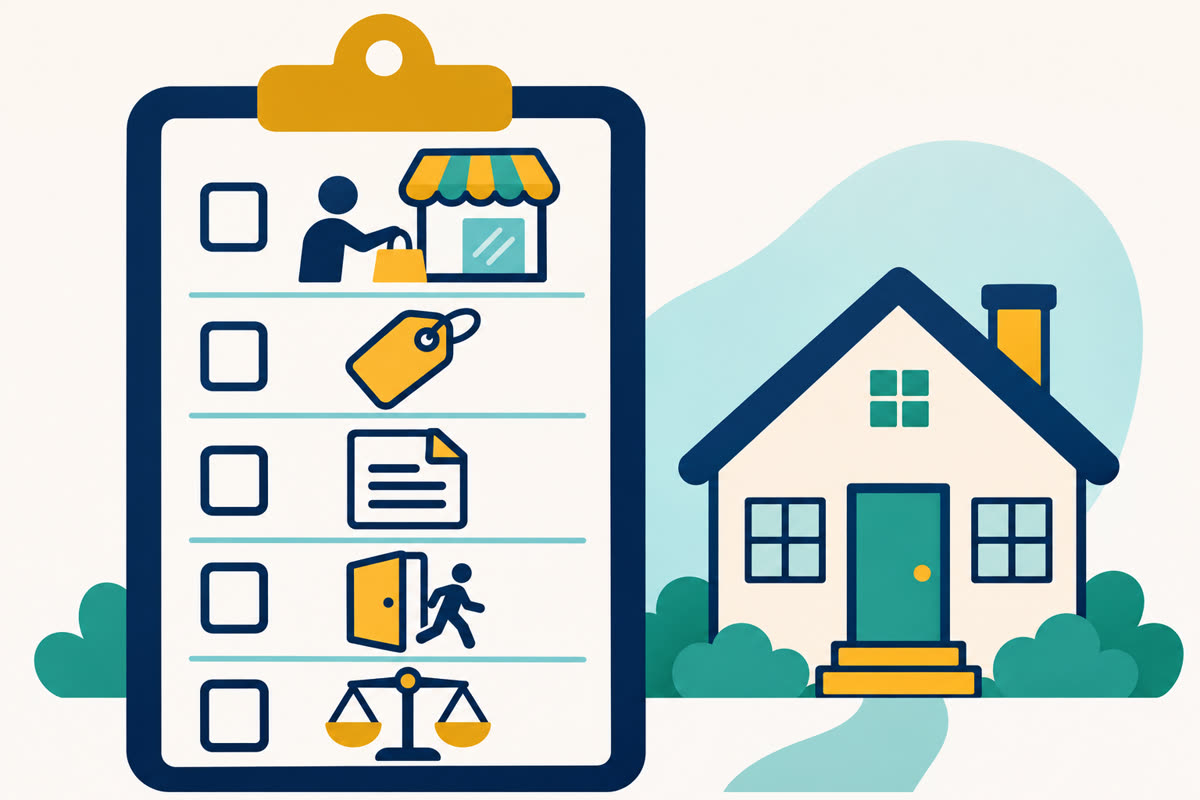
Before you join or buy into anything, answer these five questions honestly:
- Who pays you? Real customers buying something useful is good. Mostly new recruits is a red flag.
- What does it really cost? Add up upfront fees, training, tools, inventory and required monthly orders.
- Is there an income disclosure? Read it. Look at the median participant, not the top earners.
- Can you leave easily? Check refund, buy-back and cancellation terms.
- Are the claims realistic? Guaranteed income, "fully automated" or "passive from day one" are warning signs.
The legal basics
- Registration and licences: some businesses need a licence or registration; check your local government's small business pages.
- Home business rules: some areas, landlords or homeowners' associations restrict customer visits or signage.
- Taxes: keep records from day one; business income is usually taxable.
- Insurance: consider it for physical products, services in people's homes or anything involving food or animals.
Start small, test, then grow
- Pick one idea that matches your skills and budget.
- Offer it to a small group: friends, a local group, one marketplace or one social channel.
- Get your first 3–5 customers before spending real money on branding, websites or ads.
- Ask for feedback and improve the offer.
- Only then invest in tools, marketing or stock.
Spend time before money, and only invest more once you see real customers.
Case study: how to read an income disclosure
Many direct-selling and "opportunity" companies publish an income disclosure statement. Here's how to read one without getting dazzled by the top earners:
- Find the median (the middle participant), not the average. A few huge earners can pull the average up.
- Check whether figures are gross or net. Gross commissions don't subtract product purchases, fees, travel and marketing costs.
- Look at who's excluded. Some statements only include "active" participants, leaving out everyone who earned nothing or quit.
- Compare to costs. If the typical participant's commissions are lower than the required monthly purchases, most people lose money.
If a company won't share an income disclosure, treat that as a warning sign in itself.
Comparison: common home business models
| Model | Upfront cost | Inventory | Main risk | Control |
|---|---|---|---|---|
| Freelance service | Very low | None | Finding clients | High |
| Affiliate marketing | Very low | None | Slow traffic growth | High |
| Digital products | Low | None | No buyers without an audience | High |
| Handmade products | Low–medium | Yes | Time-intensive, local rules | High |
| Dropshipping / print on demand | Low–medium (ads) | None | Thin margins, ad costs | Medium |
| MLM / direct selling | Varies, often recurring | Often | Required purchases, recruiting pressure | Low |
| Franchise | High | Varies | Large investment, fees | Low–medium |
Validating demand before you invest
- Pre-sell: offer the product or service before it's fully built and see who pays.
- Ask specific questions: "Would you pay $X for this?" is less useful than "Here's the link, want one?"
- Check marketplaces: are similar products selling, with reviews?
- Search interest: are people searching for the problem you solve?
- Start with a small batch or a limited number of clients.
Simple systems that save time
- A spreadsheet for income, expenses and customers.
- Templates for quotes, invoices and common emails.
- A booking or scheduling tool for appointments.
- An email list so past customers hear about new offers.
- A weekly hour to review numbers and plan.
Where to get support
Running a business alone is hard. Local small business centres, online communities and mentors can save you time and mistakes. Read what to look for in an online entrepreneur community, and for more side-income ideas see side hustle ideas for 2026.
Frequently asked questions
What home based business can I start with no money?
Service businesses (freelancing, virtual assistance, tutoring, cleaning, pet care) and online businesses like affiliate marketing or content creation can start with tools you already have.
How do I know if a business opportunity is legitimate?
Check where the money comes from. Legitimate businesses earn from real customers buying a product or service. Be cautious if most income comes from recruiting, if you must buy inventory, or if earnings are guaranteed.
Do I need a license for a home business?
Sometimes. It depends on your country, state or city and the type of business. Check your local government's small business pages before you start.
What is the difference between a business and a "business opportunity"?
A business is something you build and control. A "business opportunity" is usually a package someone sells you (a system, distributorship or franchise-like setup). Some are fine; many are mainly selling the opportunity itself.
How do I test an idea cheaply?
Offer one service or product to a small group before investing: post it to friends, a local group or one marketplace, and see whether people actually buy.
Some links on this site are affiliate or referral links, and we may earn a commission if you buy through them. Results depend on your traffic and effort. Earnings are not guaranteed.