In this guide (13 sections)
- What is a solo ad?
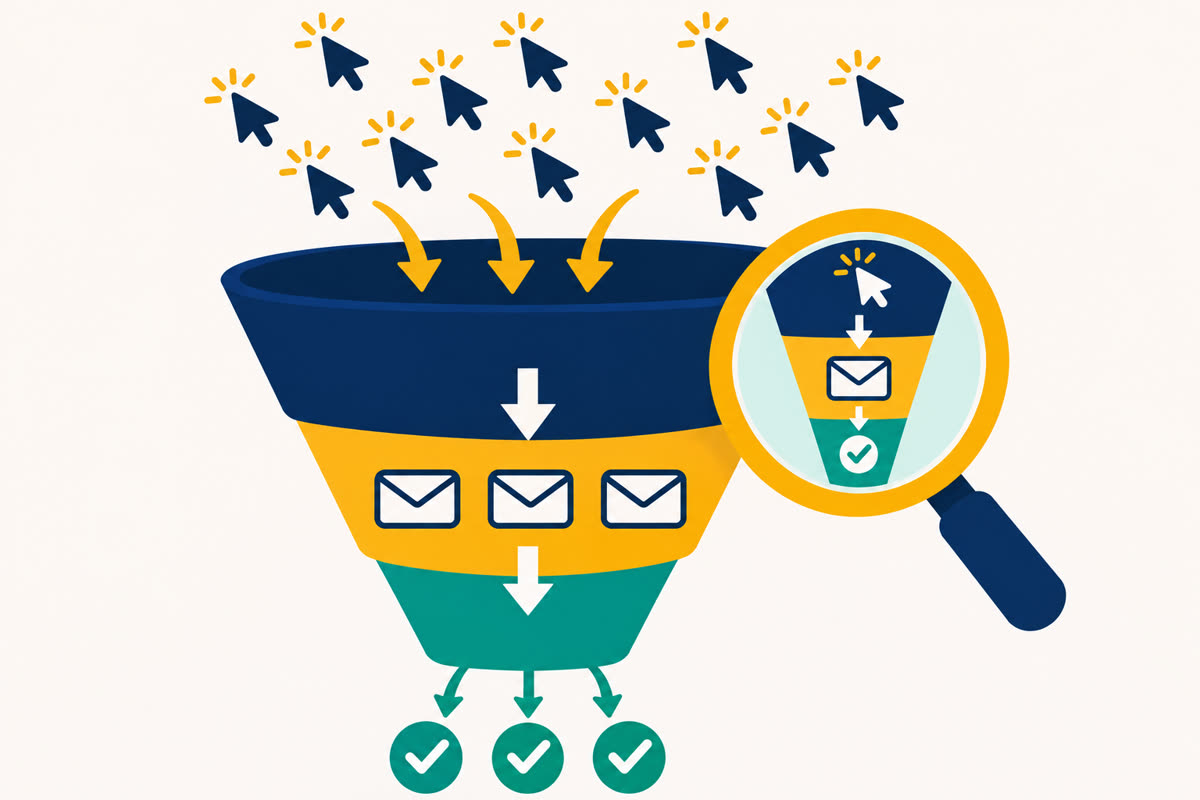
- How solo ads fit into a funnel
- How Udimi works
- What to expect from a solo ad
- The risks
- How to run a safe first test
- How to judge results fairly
- Preparing your landing page for solo ad traffic
- Write a follow-up sequence for solo ad subscribers
- How to spot fake or bot sign-ups (with examples)
- A simple vendor scorecard
- Protecting your email deliverability
- Alternatives to solo ads
Solo ads are one of the fastest ways to get people onto an email list, which is why they're popular in the make-money-online and business-opportunity niches. They're also one of the easiest places to waste money. This guide explains how they work, what to expect, how to spot bad traffic and how to run a small test properly.
What is a solo ad?
A solo ad is an email sent by a list owner (the "vendor") to their subscribers, promoting your page. It's called "solo" because your offer is the only thing in that email. You agree on a number of clicks, pay per click, and the vendor keeps sending until the clicks are delivered.
The visitors arrive on your landing page. Some of them join your list. From then on, your own follow-up emails decide whether those subscribers become customers.
How solo ads fit into a funnel
- Vendor's email → click
- Your opt-in page → sign-up
- Your welcome emails → trust and recommendations
- Offer → sale (often days or weeks later)
That's why solo ads only make sense once your page and email series are ready. Buying clicks before then is like inviting guests to a house with no furniture.
How Udimi works
Udimi is the best-known marketplace for solo ads. Instead of finding vendors in forums and paying them directly, you browse vendor profiles, see ratings and past buyer reviews, choose a number of clicks and send your link. Udimi tracks the clicks and filters some low-quality traffic, and there's a rating system after each order.
Prices are set by each vendor. They're often somewhere around $0.40–$1.00 per click, with discounts for larger orders, but this changes, so check current prices on the site. Some vendors offer "top tier" or country-filtered traffic at higher prices.
What to expect from a solo ad
| Metric | What it tells you | What to look for |
|---|---|---|
| Clicks delivered | That the vendor sent traffic | Matches your order, from the countries agreed |
| Opt-in rate | How well your page fits that audience | Varies widely; compare vendors on the same page |
| Bounces | Fake or dead email addresses | Very few; many bounces means poor traffic |
| Opens over 7 days | Whether subscribers are real and interested | A meaningful share opening at least one email |
| Clicks in your emails | Real interest in what you share | Some clicks on your recommendations |
| Sales | The real result | Usually arrive over days and weeks, not on day one |
Overlap is normal. Many people on solo ad lists are on several lists in the same niche, so some subscribers may already know your offer, or already be on your list. That's one reason to judge vendors by fresh, engaged subscribers rather than raw sign-ups.
The risks
Cheap clicks ("$10 solo ads")
Very low prices usually mean tired lists, recycled subscribers or bot traffic. You might get the clicks you paid for, but few real people who read your emails.
Fake or bot sign-ups
Warning signs include emails that bounce, made-up business addresses (like contact@something-consulting.com from people who never ran a business), many similar "firstnamelastname123@gmail.com" addresses arriving within minutes, and names that don't match the email.
No engagement
Real people open at least some emails. If almost nobody from a vendor ever opens, the traffic wasn't worth it, however many sign-ups it produced.
Deliverability damage
Lots of bad addresses can hurt your sender reputation, which means your emails land in spam for everyone else too. Use an email checker or double opt-in if you buy traffic.
How to run a safe first test
- Prepare first: a working opt-in page and at least 5 follow-up emails loaded into your email tool.
- Pick one vendor with many recent reviews from buyers in your niche.
- Order small: 50–100 clicks is enough to learn.
- Use a unique tracking link for that vendor (for example
?src=udimi-vendorname). - Watch the sign-ups as they arrive. Do the addresses look real? Any bounces?
- Wait 7 days, then check opens, clicks and any sales.
- Decide: re-order from vendors whose subscribers engage; never re-order from those whose don't.
How to judge results fairly
Don't judge a vendor by clicks or even sign-ups. A simple scorecard works better:
- Cost per engaged subscriber = what you paid ÷ subscribers who opened at least one email in a week.
- Bounce share: how many sign-ups bounced or were obviously fake.
- Fresh share: how many were genuinely new to your list.
- Sales after 14 days, if any.
Compare vendors on the same landing page and email series, so the only thing that changes is the traffic.
Preparing your landing page for solo ad traffic
Solo ad visitors arrive from an email about a topic like making money online, building a list or starting a business. Your page needs to match that expectation within a second or two:
- Match the angle: if the vendor's audience is beginners wanting an online income, a page about advanced SEO won't convert.
- Lead with a clear free offer: a checklist, short training or free tool with one obvious benefit.
- Keep it short: headline, a few bullets, one email field, one button.
- Be honest: no income promises or fake countdown timers. They attract the wrong subscribers and can get your page banned elsewhere.
- Mobile first: many people read email on their phones.
Write a follow-up sequence for solo ad subscribers
Solo ad subscribers are on several lists, so your emails compete for attention. What tends to help:
- Deliver immediately and make the freebie genuinely useful.
- Be recognisable: same sender name, a consistent style, a short personal sign-off.
- Teach before you pitch: two or three helpful emails before a recommendation.
- Ask a question they can reply to. Replies help deliverability and tell you who's real.
- Keep emailing: many sales from list-building traffic happen weeks later, not in the first few days.
How to spot fake or bot sign-ups (with examples)
Patterns that often indicate fake or automated sign-ups:
| Pattern | Example (made up) | Why it's suspicious |
|---|---|---|
| Generic business addresses on invented domains | office@summitpeakconsulting.com | Domain often doesn't exist; bounces |
| Common first+last name + digits, many in a row | jamesmiller482@gmail.com, lindawhite917@gmail.com | Typical of generated sign-ups when several arrive together |
| Look-alike domains | name@gmial.com, name@googlve.com | Typo or fake domains |
| Name doesn't match email | robertsmith@... signed up as "Mary Jones" | Form filled by a script |
| Website URL in the name field | Name: "https://..." | Spam bot |
One odd address isn't proof. A cluster of them from the same vendor, at the same time, that never open an email, is a strong sign. Report it to the vendor or marketplace and don't re-order.
A simple vendor scorecard
Keep a spreadsheet with one row per order:
| Column | How to fill it |
|---|---|
| Vendor, date, clicks, cost | From your order |
| Sign-ups | From your email tool, filtered by the vendor's tag |
| Bounced / fake | Count after 48 hours |
| Opened at least one email (7 days) | From your email tool |
| Clicked a link (14 days) | From your email tool |
| Sales (30 days) | From your affiliate dashboard |
| Cost per engaged subscriber | Cost ÷ opened |
After a few orders, the scorecard tells you clearly which vendors are worth re-ordering from, and which only look good on clicks.
Protecting your email deliverability
- Use a dedicated sending domain with proper authentication (SPF, DKIM, DMARC).
- Validate new addresses or use double opt-in for paid traffic.
- Remove bounces immediately and unengaged subscribers after a few months.
- Don't send the same subscriber several emails a day.
- Watch spam complaints; a spike means a recent email or traffic source missed the mark.
Alternatives to solo ads
If solo ads don't work for you, there are other ways to grow a list:
- Free content: short videos, Pinterest, communities. Slower but cheap. See free traffic for affiliate links.
- Push and native ads: you choose targeting and bids yourself; needs careful tracking and blocking of poor placements.
- Social ads: precise targeting, but strict rules for money-related offers.
Each has a learning curve. Whatever you choose, test small and judge by engaged subscribers, not clicks. And make sure your list-building basics are solid first: free email list building.
Frequently asked questions
What is a solo ad?
You pay someone who owns an email list to send an email about your page to their subscribers. You usually pay per click, and the visitors land on your opt-in page.
Are $10 solo ads worth it?
Rarely. Very cheap clicks often come from low-quality or overused lists, or from bots. A small test is fine, but judge it by real sign-ups that open your emails, not by the number of clicks.
How do I know if solo ad leads are real?
Check that emails look like real people, watch bounce rates, see how many open your follow-up emails over the next week, and compare against your other traffic sources.
What should I promote with solo ads?
Send solo ad clicks to your own opt-in page with a useful free offer, not straight to an affiliate sales page. Your follow-up emails do the selling over time.
How many clicks should my first order be?
Small: enough to learn, not enough to hurt. Many beginners start with 50–100 clicks from one well-reviewed vendor, then decide based on engagement a week later.
Some links on this site are affiliate or referral links, and we may earn a commission if you buy through them. Results depend on your traffic and effort. Earnings are not guaranteed.